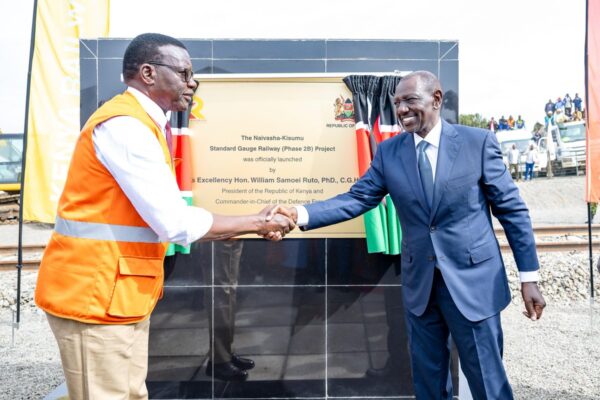
Kenya has officially relaunched its long-delayed railway extension project aimed at linking its Standard Gauge Railway (SGR) network to neighboring Uganda, marking a significant step toward strengthening regional trade and connectivity in East Africa.
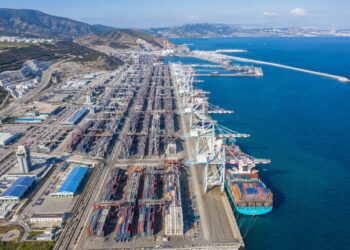
The project, which had stalled for nearly six years due to financing challenges, will extend the existing SGR line from Naivasha through western Kenya toward Kisumu and ultimately to Malaba at the Kenya–Uganda border. The extension forms part of a broader regional infrastructure plan designed to connect landlocked countries to the Port of Mombasa.
Initially launched with heavy financial backing from China, the SGR expansion faced setbacks after reduced lending under China’s Belt and Road Initiative. Rising debt concerns also forced Kenya to reconsider its borrowing strategy, delaying further construction.
However, the government has now introduced a new financing approach centered on the Railway Development Levy—a charge imposed on imports—which is expected to generate substantial annual revenue to support the project. This shift marks a move away from reliance on external debt toward a more sustainable, revenue-backed funding model.
Construction of the railway extension continues to involve China Road and Bridge Corporation, maintaining China’s role in the project while transitioning toward a partnership-based investment structure.
The initiative has received strong political backing from William Ruto and Yoweri Museveni, both of whom view the railway as a critical component of regional economic integration. The line is expected to eventually link to wider rail networks across East Africa, including routes into Rwanda, South Sudan, and the Democratic Republic of Congo.
Once completed, the railway extension is expected to significantly reduce the cost and time required to transport goods across the region. It will also ease congestion on roads, improve efficiency in cargo movement, and enhance the competitiveness of the Northern Corridor as a key trade route.
Despite renewed momentum, the project still faces challenges, including high construction costs and the need for Uganda to complete its corresponding railway infrastructure to ensure seamless connectivity.
Nonetheless, the revival of the railway extension signals renewed commitment by Kenya to invest in large-scale infrastructure projects that support long-term economic growth and regional integration.