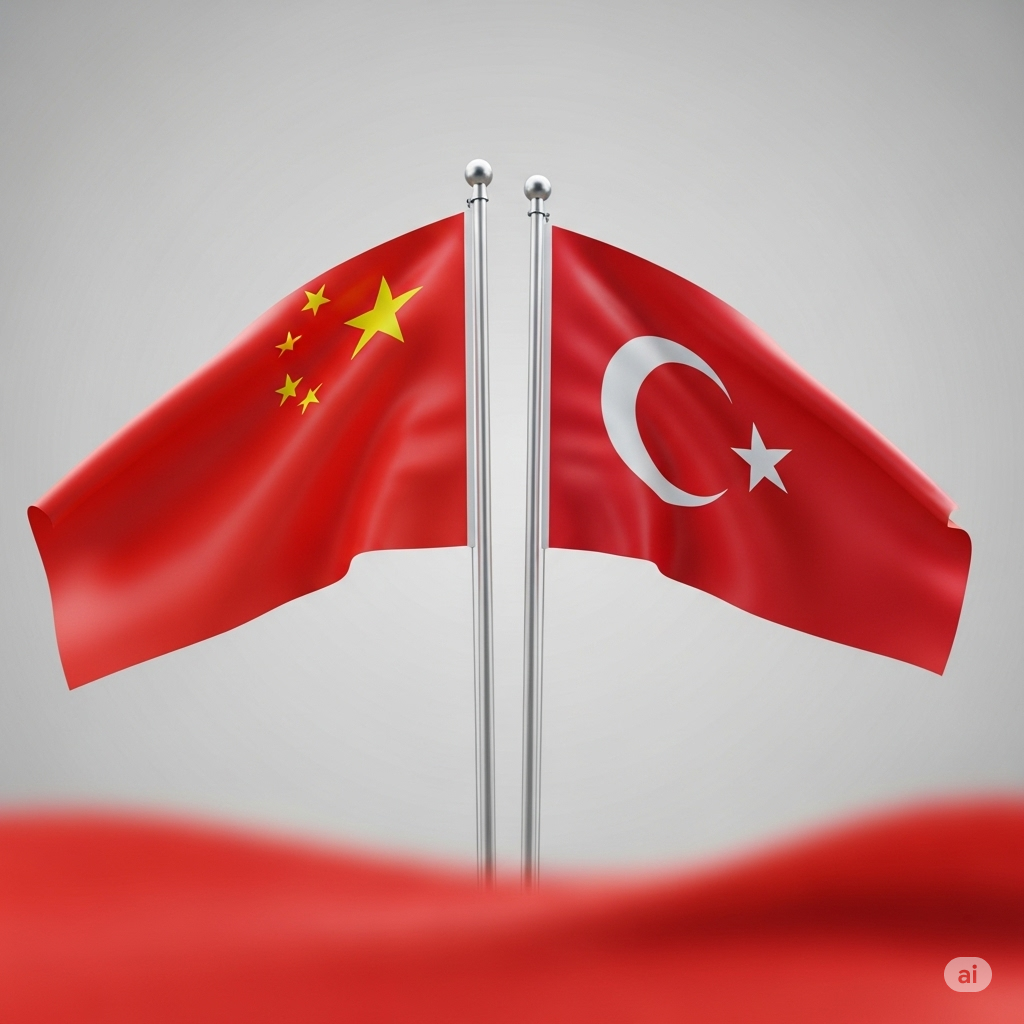
China’s longstanding dominance in African infrastructure may be facing a new challenger, as Turkish construction companies steadily expand their footprint by delivering major projects efficiently and within budget.
Second Eye Africa
Turkish firms are increasingly securing large-scale construction deals across Africa, offering African governments more options and diversifying sources of external infrastructure financing.
This shift comes amid projections by the World Bank that infrastructure demand across Africa will hit a staggering US$300 billion annually by 2040, largely driven by rapid urbanisation and population growth.
While China still leads the sector, some major projects once earmarked for Chinese firms are now shifting to Turkish companies.
A prime example is the 273-kilometre standard gauge railway line from Kampala to Malaba near the Kenyan border, now being developed by Turkish firm Yapi Merkezi. Initially awarded to China Harbour Engineering Company in 2015, the contract was reassigned by the Ugandan government after years of delay.
The project highlights a broader trend: Turkish firms are beginning to outpace Chinese companies in winning high-stakes infrastructure contracts on the continent.
In 2019, Turkish multinational Summa secured major construction deals—including a parliament complex, a shopping mall, and a convention centre—in Equatorial Guinea, Rwanda, and Ethiopia respectively, outperforming Chinese bidders, according to analysis by Middle East Eye.
Yapi Merkezi previously clinched a major contract to build one of Ethiopia’s most modern rail lines in 2017, and later outbid a Chinese firm in 2021 to land a US$900 million railway project in Tanzania.
While China still maintains a substantial financial edge, analysts say Turkey is becoming a formidable competitor in Africa’s construction sector.
Turkey’s growing role in Africa is the result of decades of calculated outreach, beginning with the Africa Action Plan of 1998, designed to establish stronger bilateral ties. Under President Recep Tayyip Erdoğan, Ankara has ramped up both diplomatic and economic engagement across the continent.
Turkey was designated a strategic partner by the African Union in 2008, and it has promoted itself as a non-colonial partner, leaning on its Ottoman legacy to signal a different kind of relationship with African nations.
These efforts materialised into two major policies—the 2008 Africa Opening and the 2013 Africa Partnership—which have further cemented Turkey’s expanding influence.
As noted by Middle East Eye, Erdoğan has described Turkey as part of an “Afro-Eurasian” identity, reflecting this deepening bond.
Diplomatic presence has surged accordingly, with the number of Turkish embassies in Africa growing from just 12 in 2002 to 43, while Turkish Airlines now connects 61 destinations across the continent.
Back in the early 1990s, Western firms—mainly from Europe and the U.S.—dominated Africa’s construction space, commanding over 85% of contracts. Chinese companies were barely in the picture.
That landscape has changed dramatically. Deloitte reports that in 2020, Chinese contractors were behind 31% of infrastructure projects worth US$50 million or more—up from 12% in 2013. By contrast, Western firms now account for just 12% of such projects, a steep decline from 37% seven years earlier.
As China crowded out the West, Turkey has quietly emerged, often going head-to-head with Chinese companies for contracts.
While Ankara cannot match Beijing’s financial muscle, its strategy favours agility—winning modest projects, delivering quickly, and building trust to scale up over time.
Through agencies like the Turkish Cooperation and Coordination Agency (TIKA), which operates 22 offices in Africa, and the Maarif Foundation, which runs 175 schools across 26 African nations, Turkey has laid a soft-power foundation that supports its economic ambitions.
This groundwork is paying off. Turkish contractors now account for nearly 18% of Africa’s international construction market, with over US$77 billion worth of projects under their belt, according to the Turkish Contractors Association.
Trade between Turkey and African countries has also flourished, increasing from $5.4 billion in 2003 to $34.5 billion by 2021.
Leading firms such as Istanbul’s Yapi Merkezi have delivered high-profile projects across Africa—from residential housing to sports arenas, hospitals, and embassies, often incorporating distinct Ottoman or Seljuq architectural influences.
Summa Construction, another major player, has made notable contributions, including Dakar Arena, Blaise Diagne International Airport, and major facilities in Niger’s capital, Niamey.
Still, China remains a formidable force. Its foreign direct investment in Africa surged by over 8,700% between 2003 and 2020, rising from $490 million to $43.4 billion. Trade between China and African countries peaked at $254 billion in 2021, and China now accounts for 16% of the continent’s manufactured imports.
Yet Turkey’s steady rise illustrates how smaller nations can challenge even the biggest players—bringing more competition, lowering project costs, and giving African governments more leverage in their infrastructure negotiations.
SEA