Many African countries are taking their first steps towards a technology that many believe has the potential to retire fossil fuels.
Africa is shifting towards the adoption of green hydrogen technologies as countries push to decarbonise their traditionally carbon-heavy sectors.
According to the International Renewable Energy Agency (IREA), South Africa, Egypt, Kenya, Morocco and Nigeria are accelerating the use of modern renewable energy.
Smaller states like Eswatini, Cape Verde, Djibouti and Rwanda have also set ambitious renewable energy targets – with investments in green hydrogen becoming a viable option.
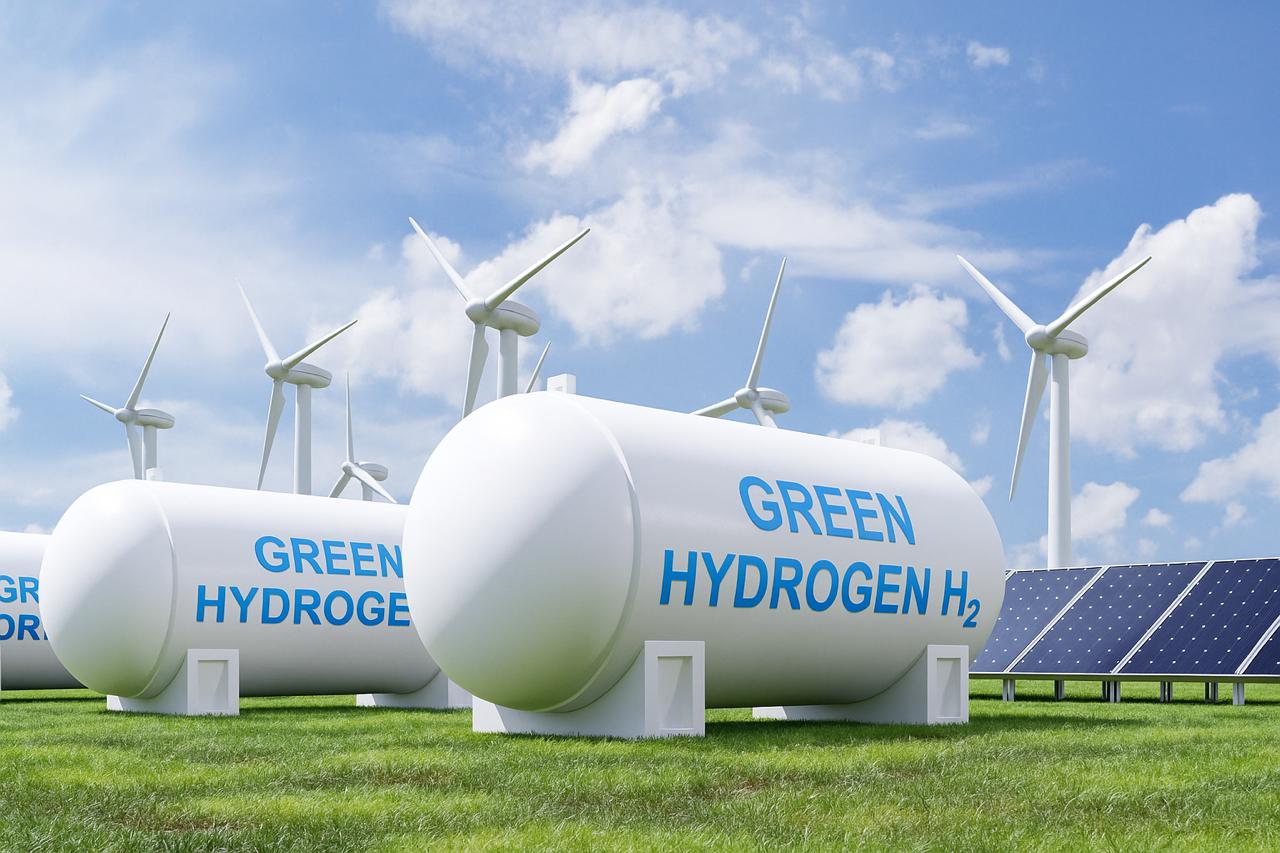
Green hydrogen is a carbon-free fuel that is made from water by using renewably produced electricity to split hydrogen molecules from oxygen molecules.
The gas can be produced at any scale and at almost any location on earth, a characteristic that is not comparable for other synthetic green fuels.
Last month, Egypt announced it was planning to invest up to 4 billion US dollars in a project to generate green hydrogen gas through water electrolysis.
Egyptian Minister of Electricity and Renewable Energy Mohamed Shaker was upbeat that the project, currently in the feasibility studies stage, will be implemented in partnership with the German conglomerate, Siemens.
An area of more than 7,000 square km has been allocated for renewable energy production projects in Egypt, with an estimated potential output of 90,000 megawatts (MW).
In 2021, Germany announced it was partnering with several West African states to develop green hydrogen in the region.
In May, Germany’s education and research minister Anja Karliczek presented the “Green Hydrogen Potential Atlas” as the new frontier of clean energy in Africa.
“Many African countries have very good prerequisites for the production of green hydrogen,” Karliczek told EQ International. “We would like to start a cooperation with them.”
He said West Africa has the potential to generate up to 165,000 terawatt hours of green hydrogen per year – about 1,500 times Germany’s estimated hydrogen demand for 2030.
“Green hydrogen offers a real opportunity to initiate a development in Africa that is being driven by the African states themselves,” Karliczek added, noting that the region could become a global green hydrogen powerhouse.
A World Bank report on Green Hydrogen in developing countries shows that low-and-middle income economies with good renewable energy resources could produce green hydrogen locally, and generate billions in economic opportunities.
This will increase energy security in those states by reducing exposure to oil price volatility and supply disruptions.
South Africa has already started to gain experience using ammonia-based and methanol-based fuel cell systems for its telecommunications sector.
Other larger hydrogen or fuel cell projects are being piloted to provide stationary power solutions in Mali and Uganda.
Green hydrogen solutions could decarbonize hard-to-abate sectors such as heavy industry, buildings, and transport while catalyzing renewable-based energy systems in developing countries.