The African Union (AU) has thrown its weight behind the “Correct The Map” campaign, which seeks to replace the centuries-old Mercator projection with more accurate world maps—particularly the Equal Earth projection—to reflect Africa’s true scale.
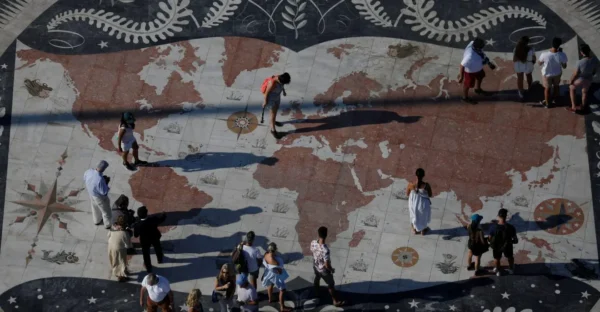
The Mercator map, created in 1599, has long been criticized for distorting the size of countries, inflating regions near the poles such as Europe, Greenland, and North America, while shrinking landmasses closer to the equator, including Africa and South America. This distortion, AU officials say, has reinforced a misleading and marginalizing perception of Africa, despite it being the world’s second-largest continent and home to over a billion people.
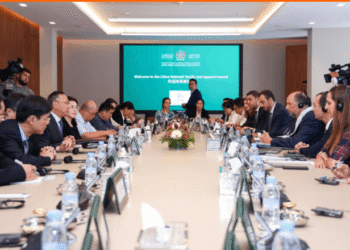
AU Commission Deputy Chairperson Selma Malika Haddadi emphasized that accurate maps are vital for shaping identity, education, and policy. She noted that “the way Africa is represented influences how it is respected and understood globally.”
The campaign—led by advocacy groups Africa No Filter and Speak Up Africa—urges governments, global institutions, and schools to adopt the Equal Earth projection. This design keeps landmass proportions more accurate while maintaining a visually recognizable shape of the world.
A key goal is to integrate the Equal Earth map into African school curricula, ensuring future generations grow up with a correct understanding of the continent’s true size. The AU also wants major organizations, such as the United Nations and World Bank, to standardize its use in publications and online platforms.
The World Bank has already started phasing out the Mercator projection for its web maps and uses either the Equal Earth or the Winkel-Tripel projection for static visuals.
Supporters argue that adopting more accurate maps is not only a technical update but also a symbolic move to challenge the lingering colonial legacy in global cartography—one that has, for centuries, visually diminished Africa’s prominence on the world stage.