
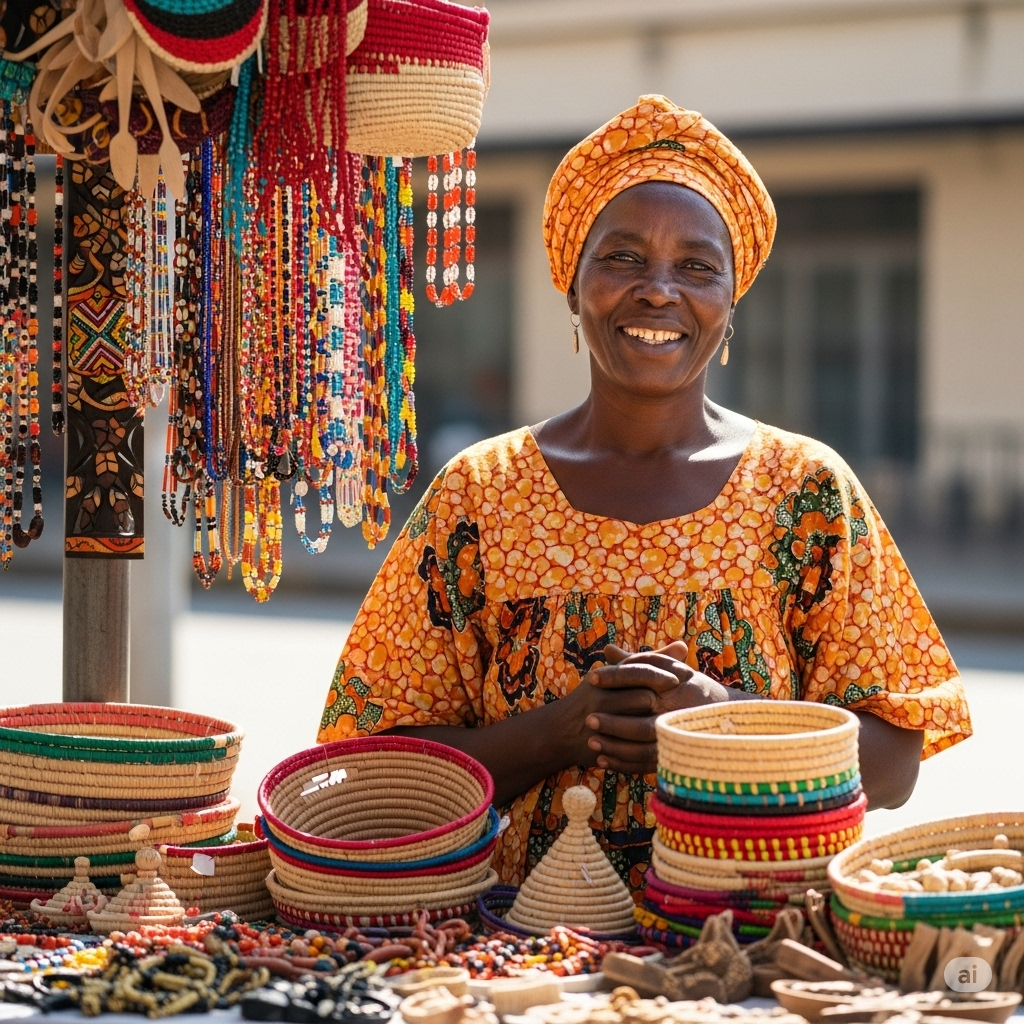
In Uganda, Botswana, and Ghana, women have surged to the top of a global index measuring entrepreneurial participation and ambition. With clearer access to robust data, these trends challenge old assumptions—and raise the question: could similar patterns emerge across more parts of Africa as data improves? And how did COVID-19 shape this momentum?
Second Eye Africa
From enterprising teenagers to tech trailblazers, African women are reshaping the business landscape with remarkable tenacity. New data now brings their impact into sharp focus, offering undeniable proof of their growing influence.
The 2020 Mastercard Index of Women Entrepreneurs (MIWE) positions Uganda (39.6%), Botswana (38.5%), and Ghana (36.5%) as the top three countries globally in terms of the percentage of businesses owned by women.
Nigeria, South Africa, Malawi, Angola, Algeria, Tunisia, Ethiopia, and Egypt also appear prominently in the MIWE’s top 100 rankings. According to the study, the growth of female-led enterprises across Africa is outpacing general employment rates—pointing to a powerful and rising trend.
The index uses the percentage of female business owners relative to total business owners as its key metric, and all three leading countries posted gains since the previous edition. Botswana aside, most African nations included in the report recorded higher MIWE scores than in 2019.
“South Africa posted the most significant improvement with a 7% increase, while Botswana’s jump from 36% to 38.5% kept it ahead of Ghana, which now holds the third position globally,” the report noted. Earlier data had underrepresented women-led ventures due to various reporting limitations.
Mastercard’s findings also highlight that women in countries like Malawi, Nigeria, and Angola are launching businesses in spite of—rather than because of—the often harsh economic and societal contexts in which they operate.
Perhaps even more striking is the confidence of Africa’s entrepreneurs. A report by the Global Entrepreneurship Monitor (GEM) ranks African nations among the highest in the world when it comes to belief in entrepreneurial capability.
In Malawi, for instance, people are twice as likely as their British counterparts to express confidence in starting a business.
This optimism stems from several factors, including a low fear of failure, limited alternative income options, and a strong sense of duty to uplift local communities.
In places like Nigeria, Uganda, and Angola, attributes like creativity, individualism, bold risk-taking, and innovation are highly valued among entrepreneurs.
But the MIWE study didn’t just spotlight Africa’s strengths. It also underlined the harsh toll the COVID-19 pandemic has taken on women-led businesses globally, with 87% of respondents reporting negative impacts.
Ghana’s sectoral data shows that 85.1% of women-run enterprises operate in industries hardest hit by the crisis, compared to just 50.5% for their male counterparts. In Uganda, even after lockdown restrictions were lifted, 61% of women-owned small businesses reported zero income generation.
“Our research urges us to rethink how we support women as economic agents—not only within communities, but across national and global recovery frameworks,” said Ifeoma Dozie, Director of Marketing and Communications for Mastercard in Sub-Saharan Africa. “With more women likely to be disproportionately affected by the pandemic, interventions like financial incentives, mentoring, access to digital tools and platforms are now more vital than ever.”
SEA