
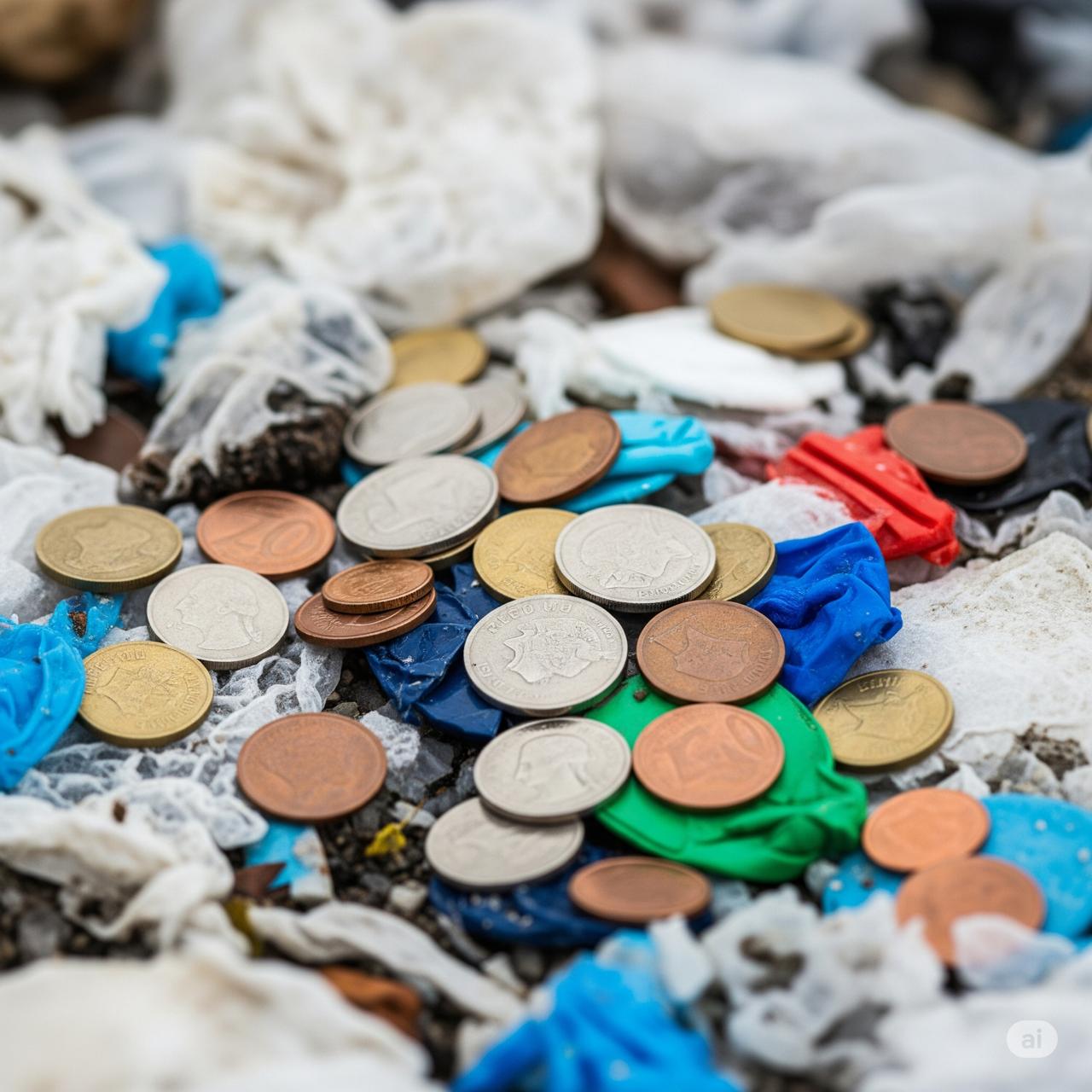
A raft of legislative measures is fuelling Africa’s fight against plastic waste, as startups across the continent roll out creative solutions to repurpose plastic into bricks, furniture, and art.
Second Eye Africa
The amount of plastic clogging Africa’s landfills is slowly decreasing, as governments across the region tighten restrictions on single-use plastics and packaging in an effort to cut pollution.
Of the continent’s 54 states, 34 have passed laws or issued ordinances banning or limiting non-recyclable plastic, positioning Africa as a global leader in the push to eliminate disposable plastics.
Yet, enforcing bans and clamping down on black-market trade remains difficult in many nations, even as multinational corporations face blame for the plastic pollution burdening the continent.
The 2021 Plastic Waste Makers Index revealed that just 20 companies are responsible for more than half of the world’s single-use plastic waste—none of which are based in Africa.
The index identifies nations and entities fuelling the climate crisis through the production of virgin polymers, which include items from face masks to plastic bottles and bags that frequently end up in landfills, oceans, or incinerators.
The data shows that companies headquartered in the U.S., Europe, Asia, and the Middle East account for 55 percent of the world’s plastic pollution.
American giants ExxonMobil and Dow top the list, contributing 5.9 million and 5.6 million tonnes of disposable plastic waste respectively in 2019.
China’s Sinopec and Thailand-based Indorama Ventures generated 5.3 million and 4.6 million tonnes, while Saudi Aramco followed closely, producing 4.3 million tonnes during the same period.
According to figures shared by Greenspace, 34 out of 54 African nations have either enacted and enforced a ban on plastics or passed legislation in preparation for implementation.
“Of those, 16 have completely banned plastic bags or partially done so, though regulations to enforce the bans remain pending. Compared to other regions, Africa appears to be performing impressively,” reads the report.
Eritrea was the first country to institute a total plastic bag ban back in 2005, followed by Benin, which outlawed the production and import of non-biodegradable plastic bags.
Other countries making headway include Rwanda, Kenya, Tanzania, Uganda, Senegal, Côte d’Ivoire, Madagascar, Nigeria, Mali, Tunisia, Malawi, Mauritania, The Gambia, and Mauritius.
Also on the list are the Democratic Republic of Congo, Congo Brazzaville, Seychelles, Burkina Faso, Botswana, Zambia, South Africa, Gabon, Ethiopia, Cameroon, Djibouti, Morocco, Niger, Togo, Zimbabwe, Cabo Verde, Burundi, and Guinea Bissau.
As governments crack down on single-use plastics, startups are stepping in to transform waste into practical products.
In Accra, Ghana, entrepreneur Nelson Boateng is crafting construction bricks from recycled plastic waste—mirroring the efforts of Nzambi Matee in Kenya, who founded Nairobi-based Gjenge Makers. The company produces low-cost, lightweight bricks by blending plastic waste with sand, resulting in material stronger than concrete.
In Johannesburg, South Africa, Mbongeni Buthelezi has gained international acclaim for turning discarded plastic into richly textured portraiture from his studio in Booysens. Across the continent, more artists are creatively upcycling plastic into decor, sculptures, and functional art.
Meanwhile, Kenyan startup Noma Green Plastic Limited is repurposing up to 30 tonnes of plastic waste every month into outdoor furniture such as benches, tiles, chairs, and tables.
Still, despite notable progress in plastic bans, most African nations continue to lack efficient waste collection and management systems.
Nonetheless, according to the UNEP Africa Waste Management Outlook, African countries are among the smallest contributors to global plastic waste, with most of their waste stream made up of organic material.
In 2019, the continent generated 180 million tonnes of municipal waste, averaging 0.5 percent per capita per day, according to data from Science Direct, with a population exceeding 1 billion.
UNEP figures show that 57 percent of this waste was organic, 13 percent plastic, 9 percent paper, and 4 percent each from metal and glass.
This stands in stark contrast to countries like Australia, where the average person generates 59 kilograms of plastic waste annually, according to the Plastic Waste Makers Index.
In 2019, the index reported per capita plastic waste levels of 53 kg in the U.S., 44 kg each in South Korea and the UK, 37 kg in Japan, 36 kg in France, 35 kg in Saudi Arabia, 34 kg in Spain and Canada, and 23 kg in Italy. In Germany, the average was 25 kg per person, while China and India registered just 18 kg and 4 kg respectively.
However, figures released in 2020 by Science Advances and later cited by Forbes painted a more alarming picture.
According to those figures, U.S. residents generated an average of 105 kg of plastic waste per person annually, while UK citizens produced nearly 99 kg.
That report estimated that out of the 300 million tonnes of plastic waste created globally each year, at least 8.8 million tonnes end up in the ocean.
Across Africa, approximately 70 percent of all garbage is dumped, with annual plastic waste generation just over 17 million tonnes, as reported by Science Direct.
Experts warn this trajectory is unsustainable.
“An environmental catastrophe beckons: much of the resulting single-use plastic waste will end up as pollution in developing countries with poor waste management systems,” the Plastic Waste Makers Index stated.
“The projected rate of growth in virgin polymer production is likely to make new, circular models of reuse and recycling financially uncompetitive without policy intervention.”
According to the UK’s Guardian, global production capacity for virgin polymers used in single-use plastics could expand by over 30 percent within the next five years. By 2050, at current trends, plastics are projected to account for between 5 and 10 percent of global greenhouse gas emissions.