
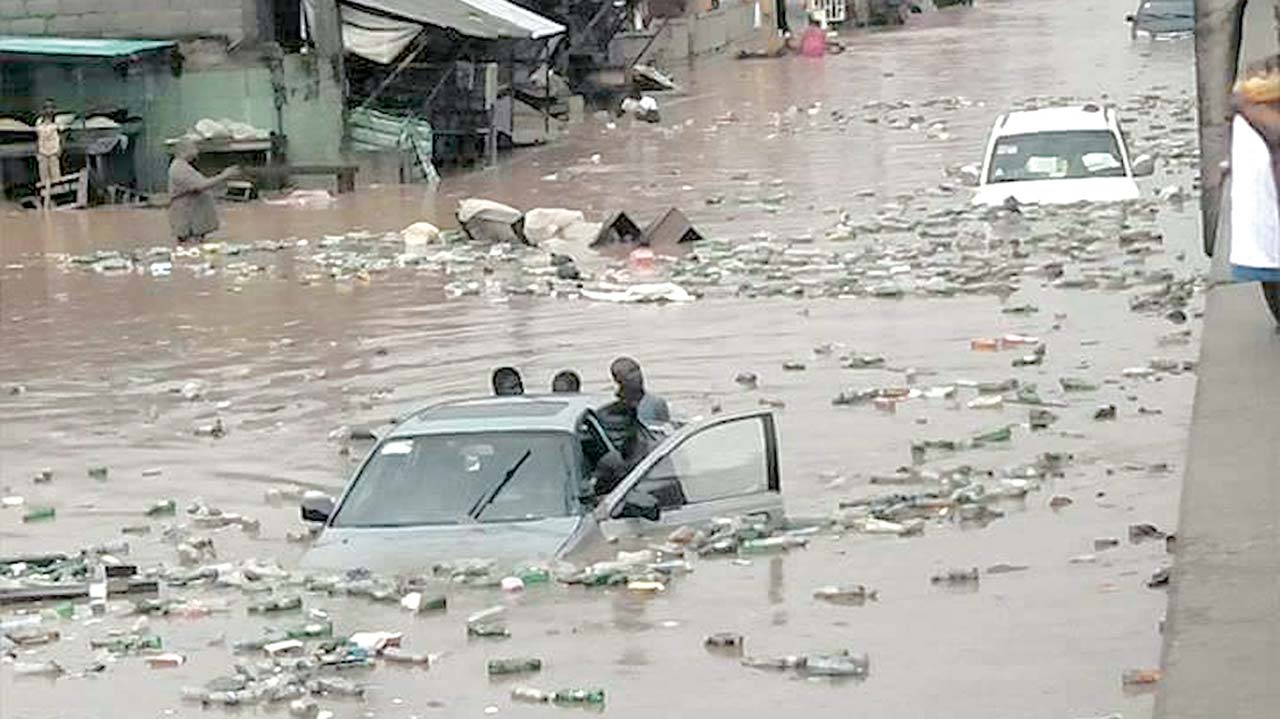
Africa makes the world’s fastest disaster resilience gains
Growing access to the internet, stronger household preparedness and improved financial security are helping African regions record the world’s fastest gains in disaster resilience, according to a global study.
But the findings from Lloyd’s Register Foundation also reveal gaps in protection, with fewer than half of disaster-affected adults in Central and Western Africa receiving a warning before an emergency.
The contrast highlights a challenge for governments: improvements in people’s ability to withstand disruption are not yet matched by consistent access to information and the means to act.
North Africa recorded a five-point rise in resilience since 2023, followed by Southern Africa with four points. Eastern Africa and Central and Western Africa each gained three points.
Countries contributing to those improvements included Algeria, Nigeria, Kenya, Egypt and Uganda, although the factors driving progress differed.
The findings come from the fourth edition of the World Risk Poll, conducted by Gallup, which surveyed more than 143,000 people across 140 countries and territories in 2025.
Its Resilience Index measures the ability to absorb and recover from shocks on a scale of zero to 100, covering individuals, households, communities and wider society.
The results show the fastest improvement, rather than establishing Africa as the world’s most resilient continent.
Internet access can help people obtain information about approaching dangers, while household preparations can improve their capacity to respond. However, the study shows that receiving an alert is only one part of disaster protection.
In Central and Western Africa, just 47% of adults affected by disasters said they had been warned.
The wider findings reveal a similar imbalance between exposure and protection. Nearly one in three adults in low-income countries had experienced a disaster during the previous five years, compared with 16% in high-income countries.
Yet warning coverage among those affected stood at 64% in poorer countries, against 84% in wealthier ones.
Fewer than half of warned adults in low- and lower-middle-income countries acted before disaster struck, compared with 71% in high-income countries.
Mobile phones offer one route to reaching more people.
Worldwide, an estimated 1.1 billion adults experienced a disaster over five years, but almost 220 million received no advance warning. Of those left without an alert, 77% owned a mobile phone — more than 170 million people.
Using several communication channels was also associated with greater action. Some 37% of people warned through one channel responded, rising to 51% for two channels and 64% for three.
Community preparation offers another practical approach. In Malawi, volunteers mobilised residents to clear storm drains before extreme rainfall in January, according to the International Federation of Red Cross and Red Crescent Societies.
The study also challenges assumptions about wealth and security. Globally, societal resilience rose to 66 points in 2025, while individual resilience fell to a record low of 42.
Lloyd’s Register Foundation is calling for broader warning coverage and greater investment in household preparedness.
Africa’s gains show progress, but the warning gaps underline how much protection still depends on whether people can respond before danger arrives.
Second Eye Africa